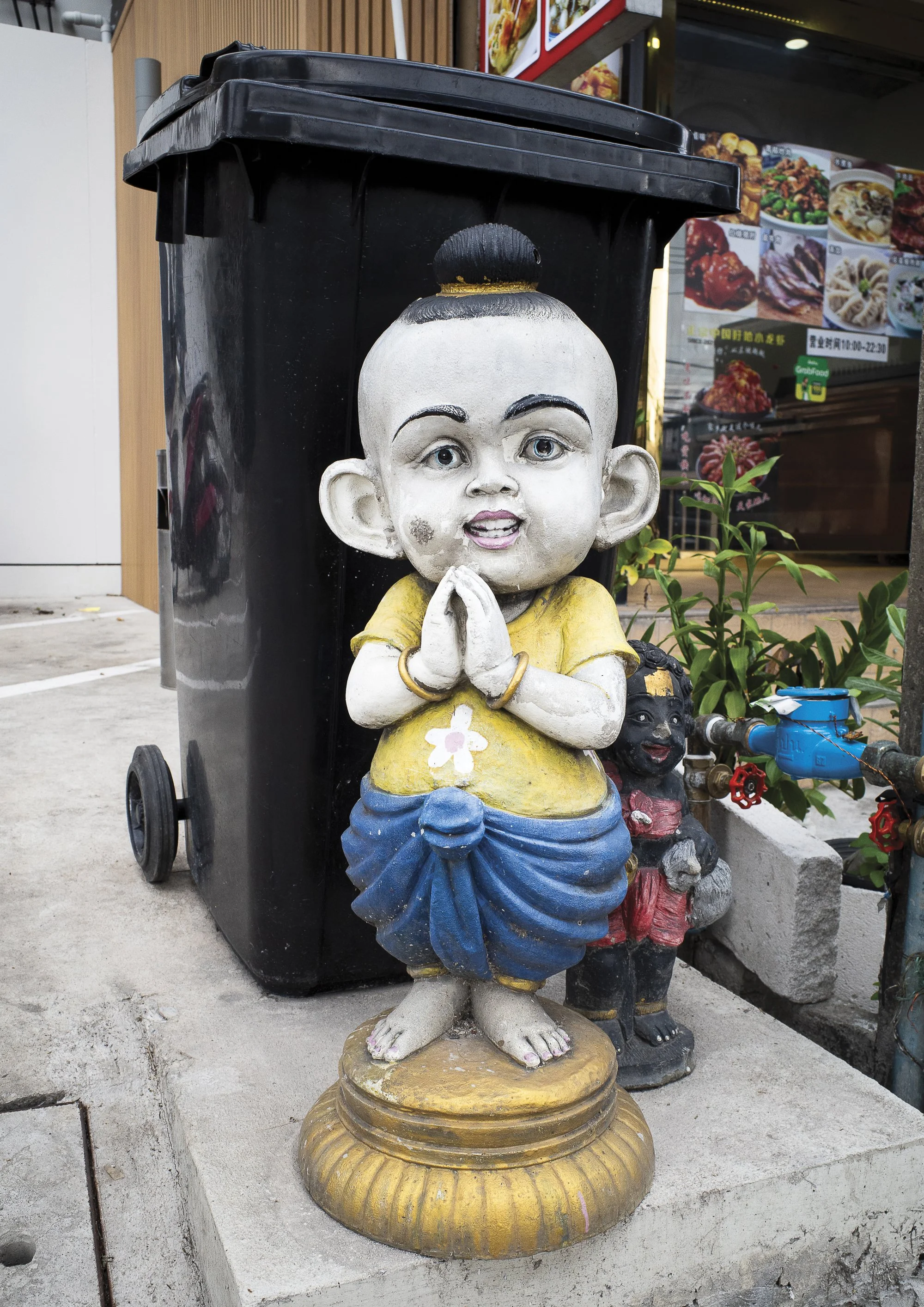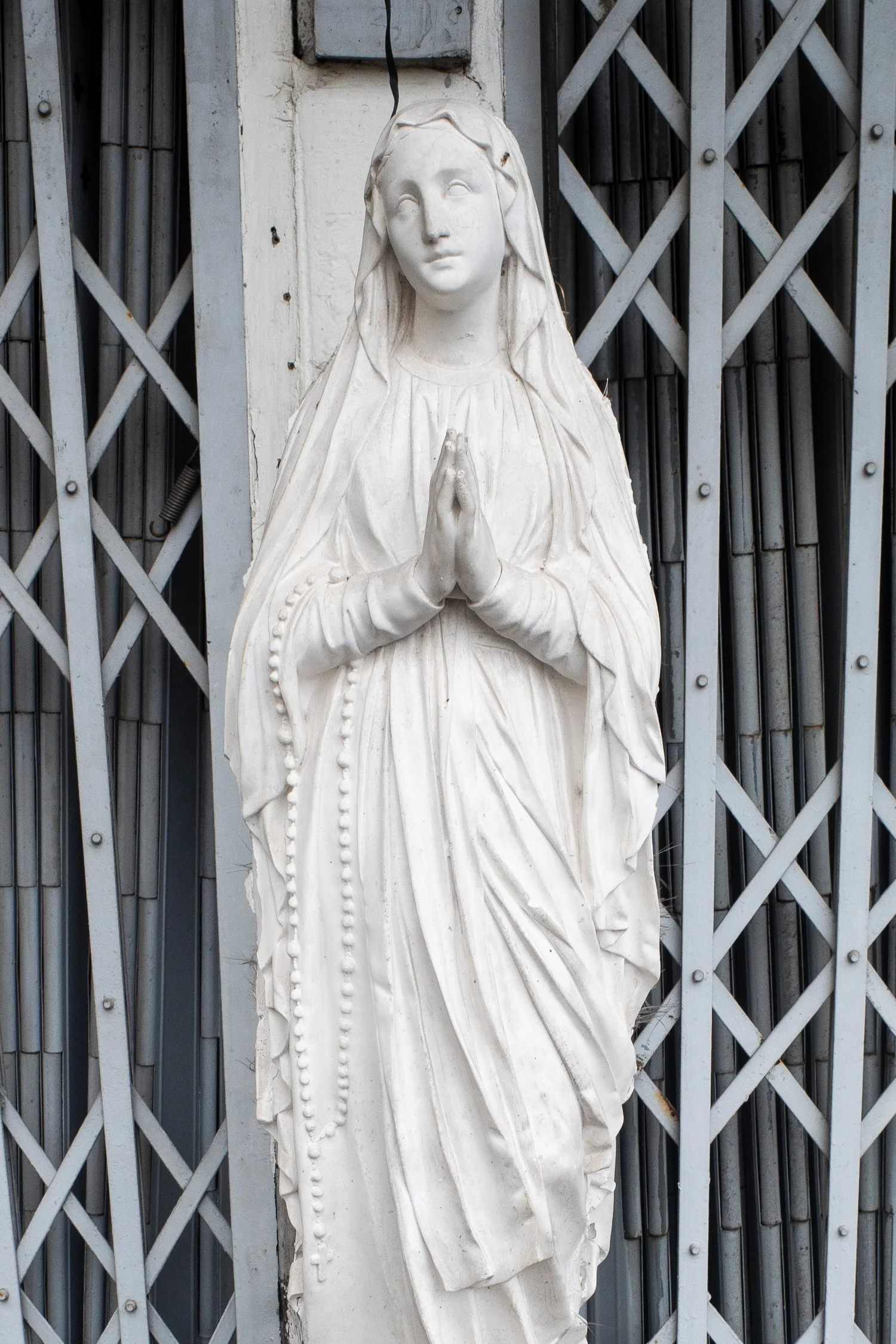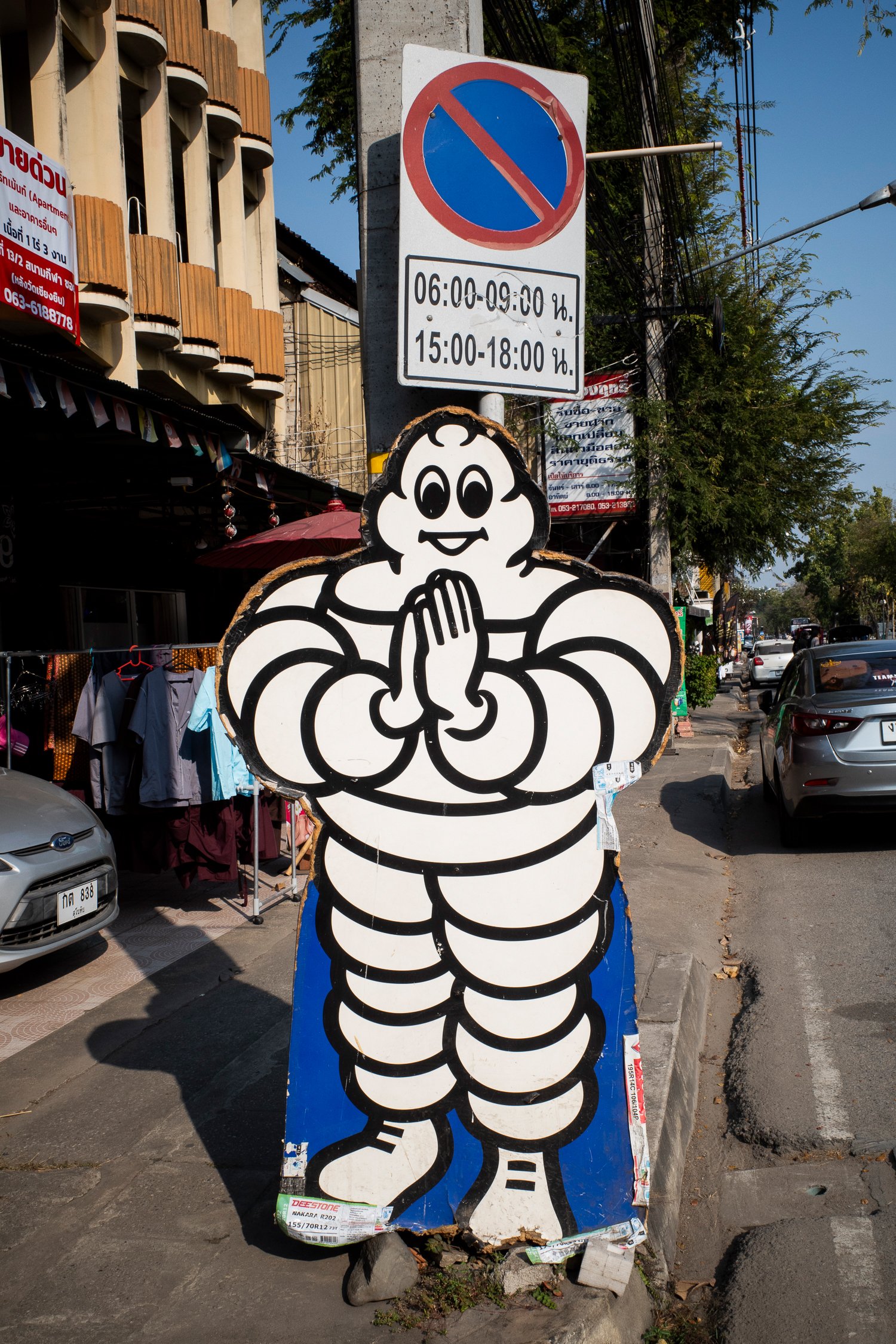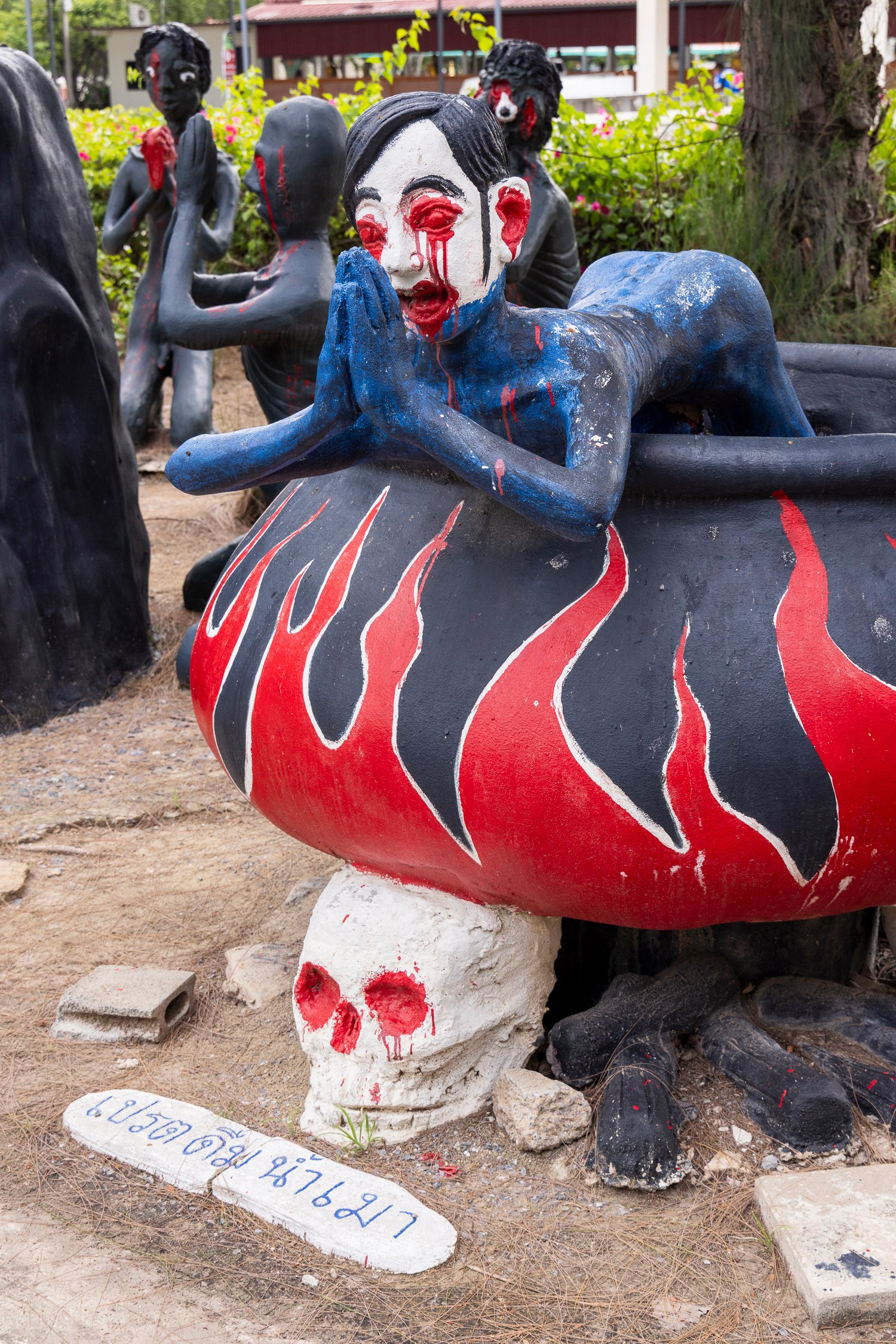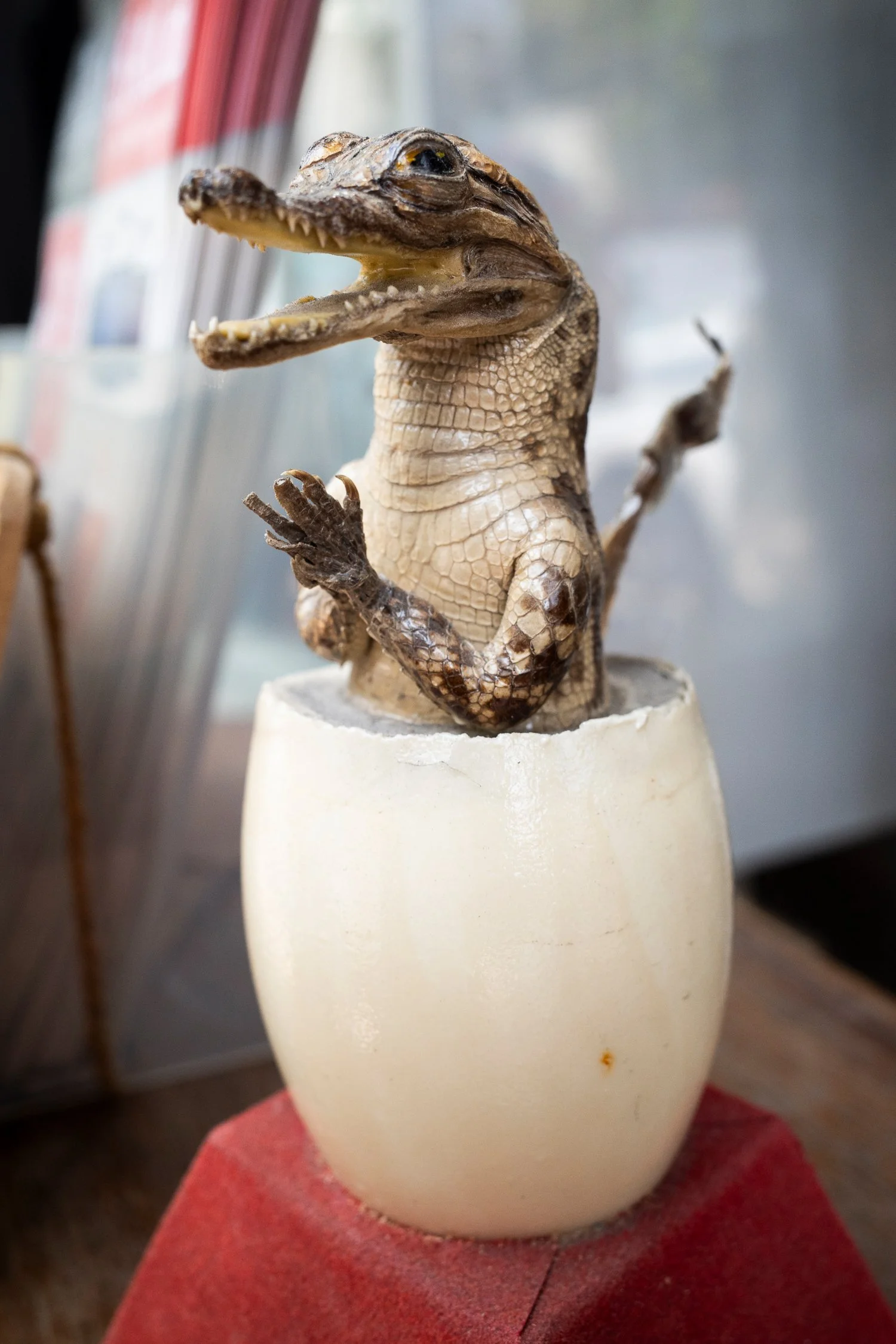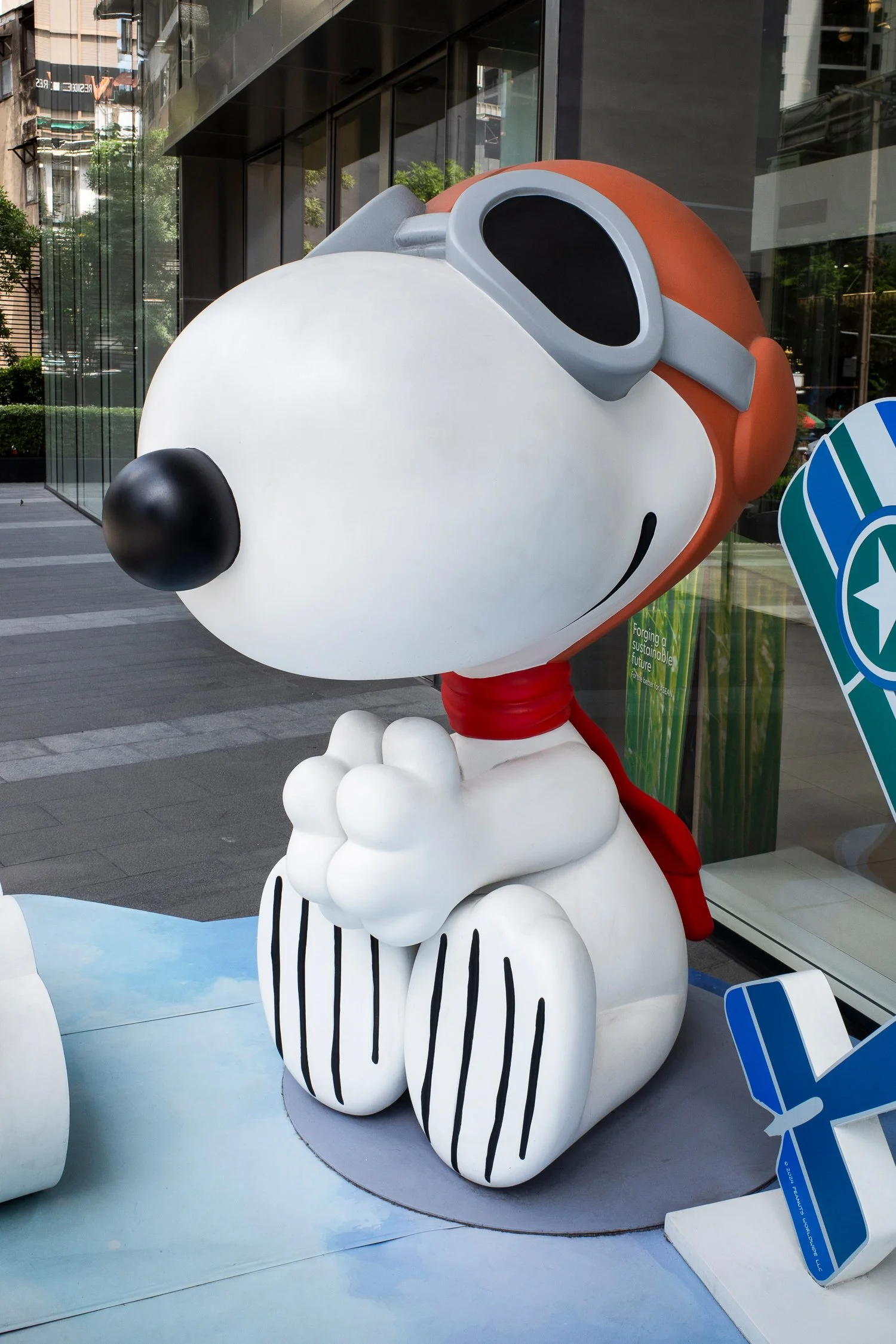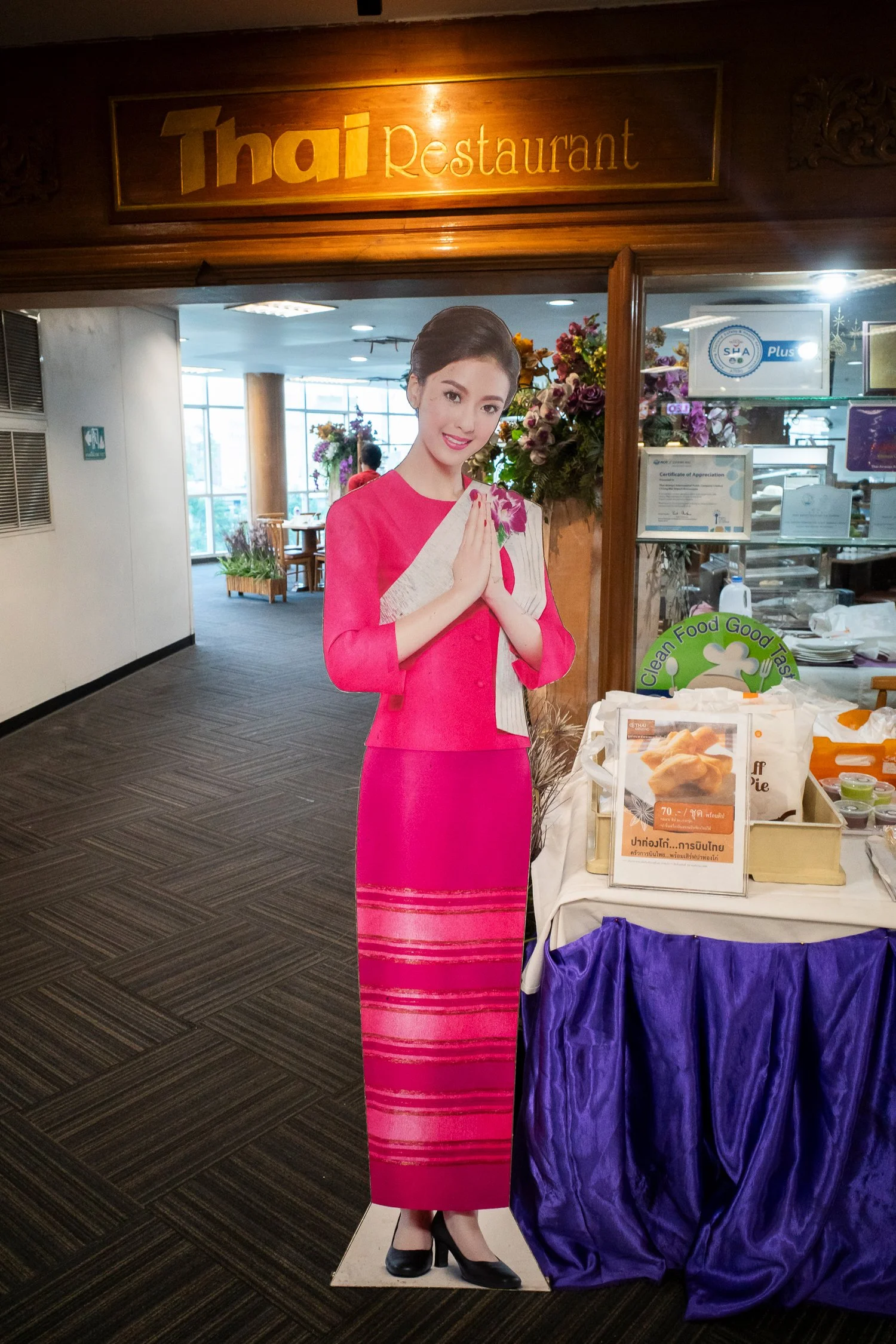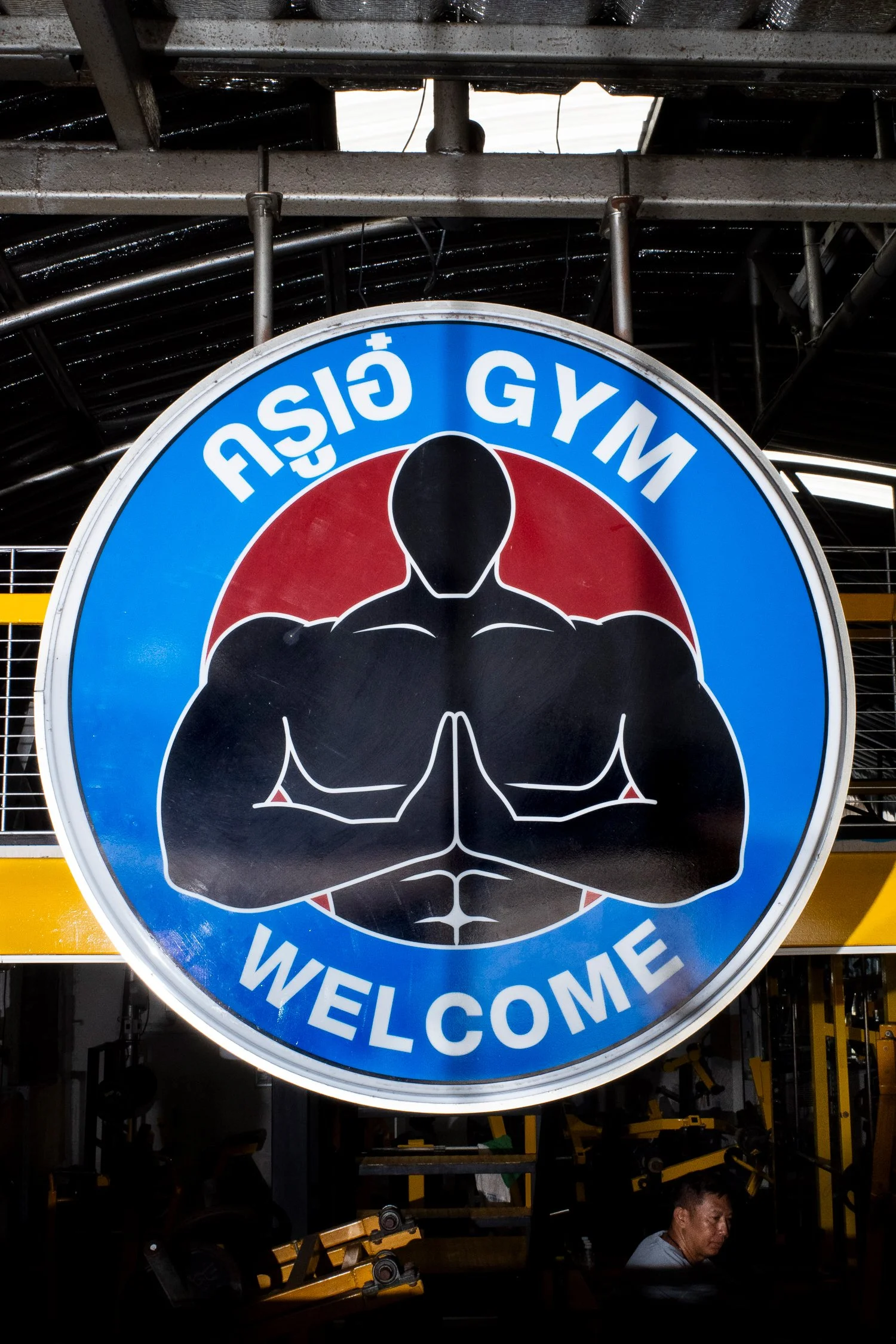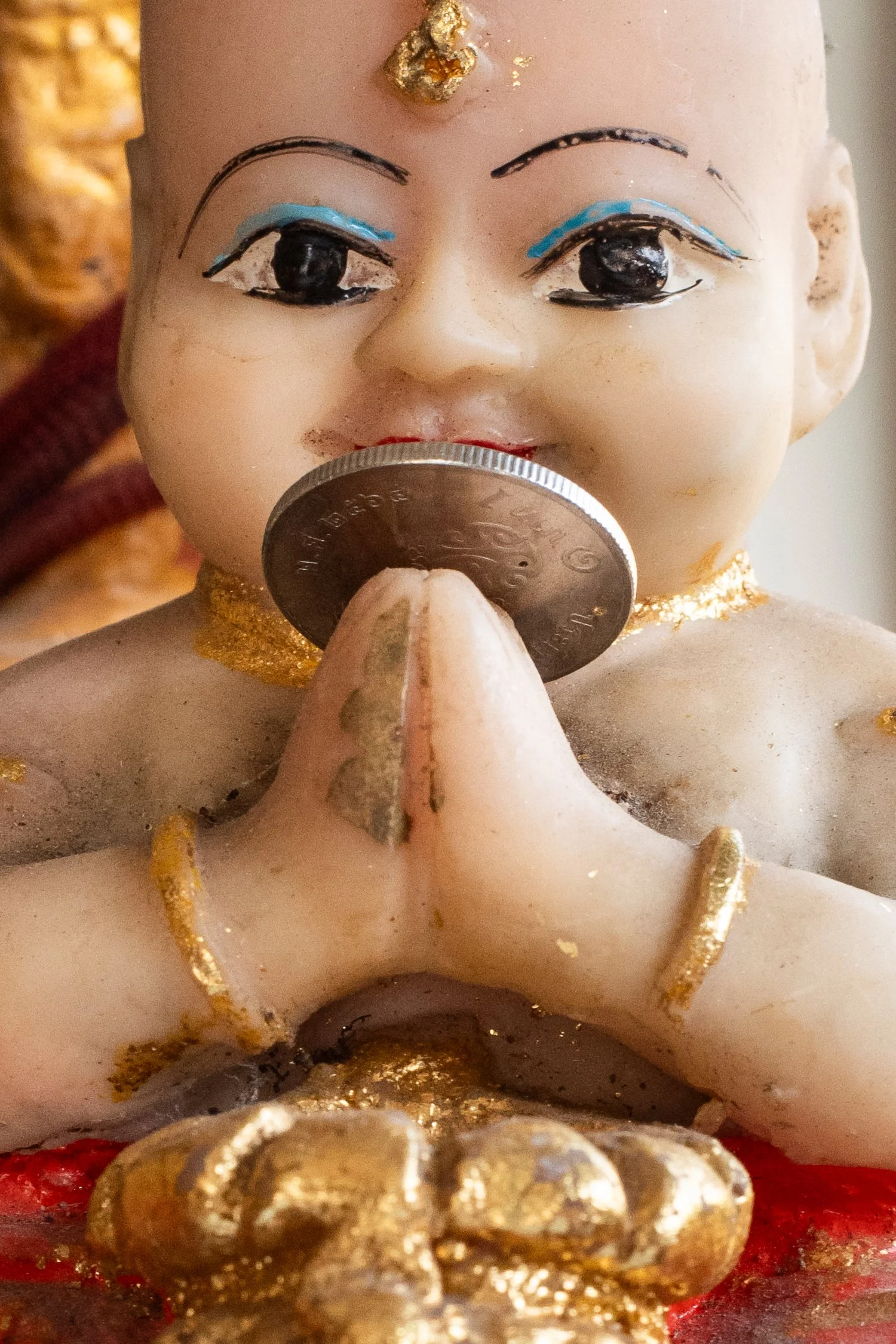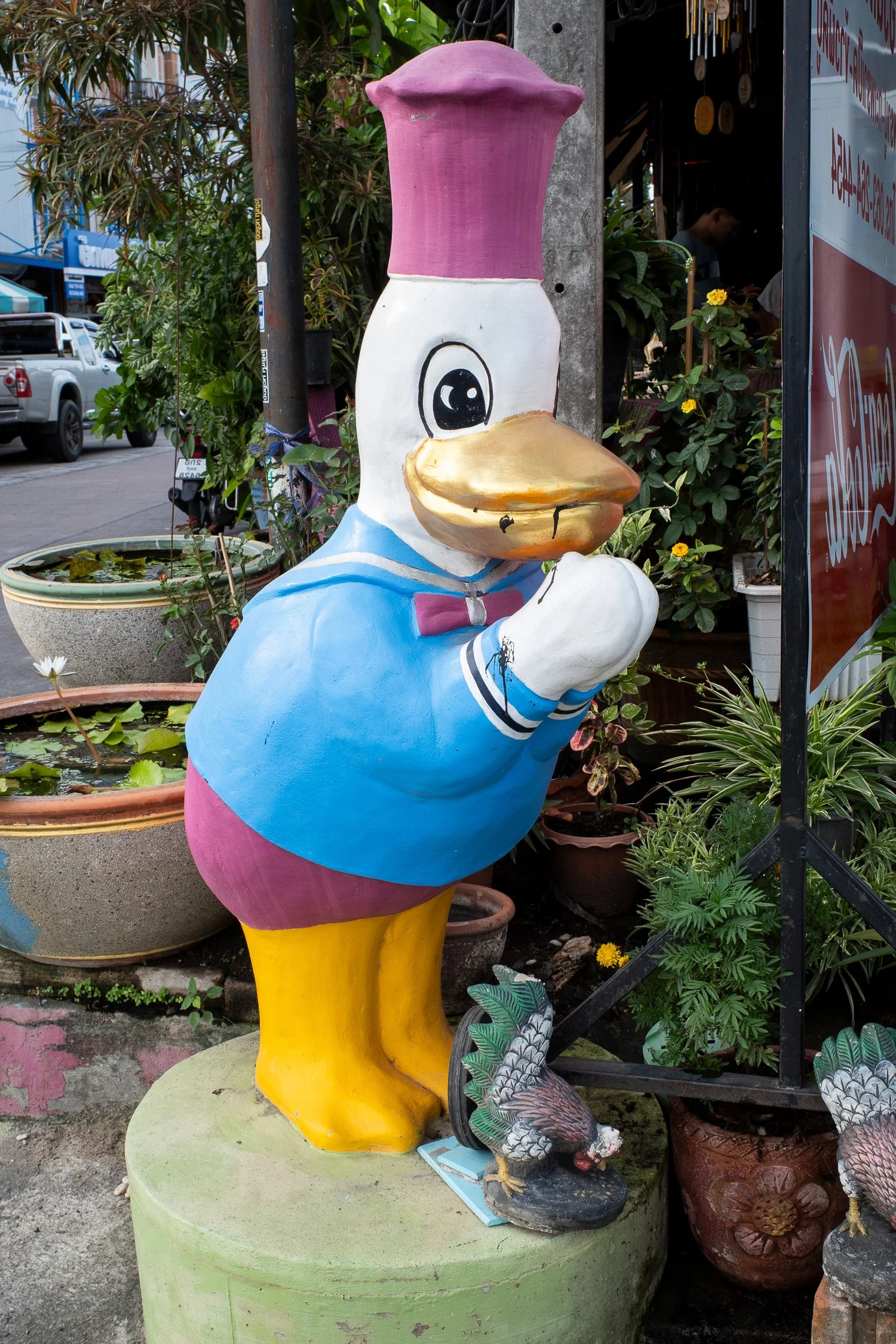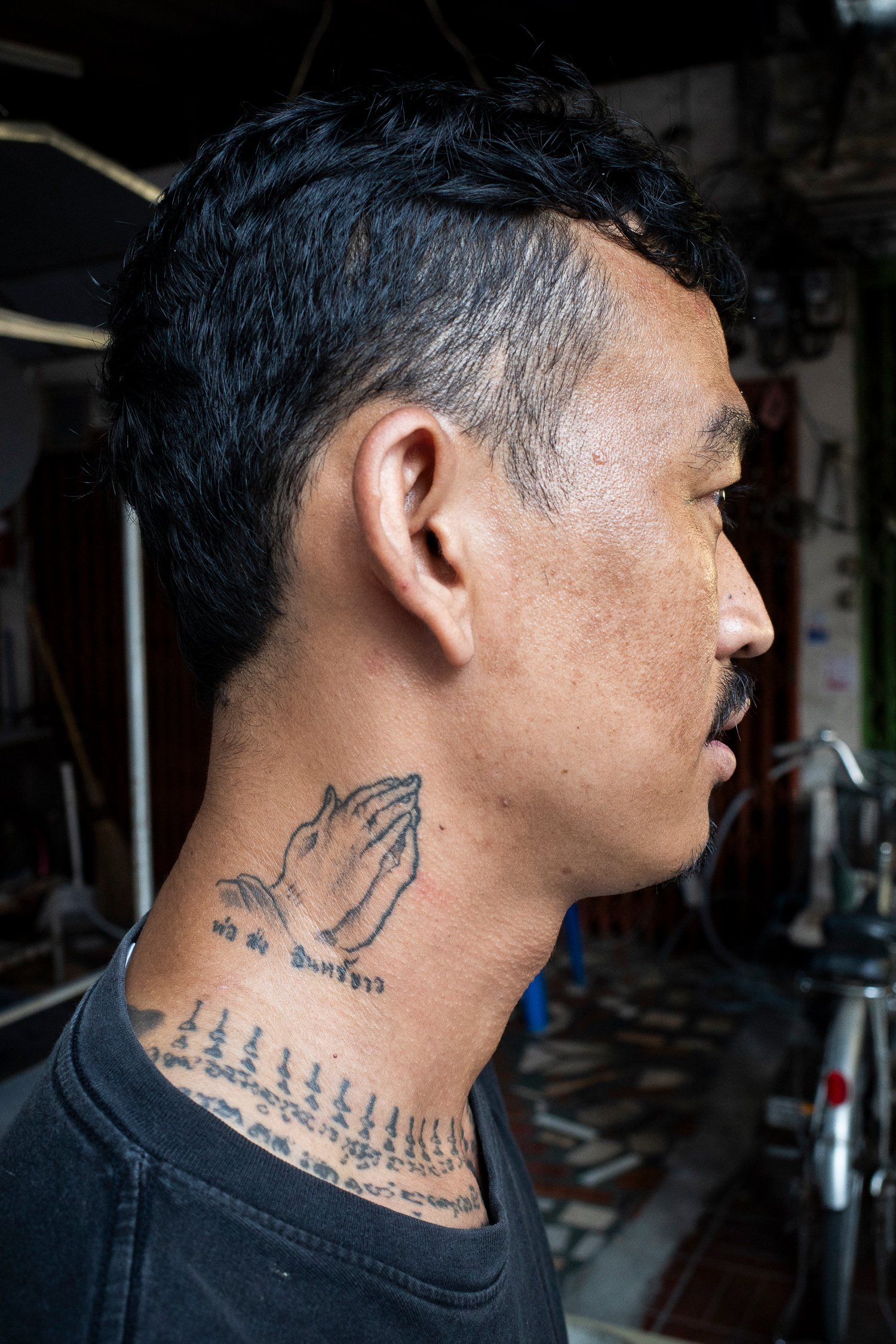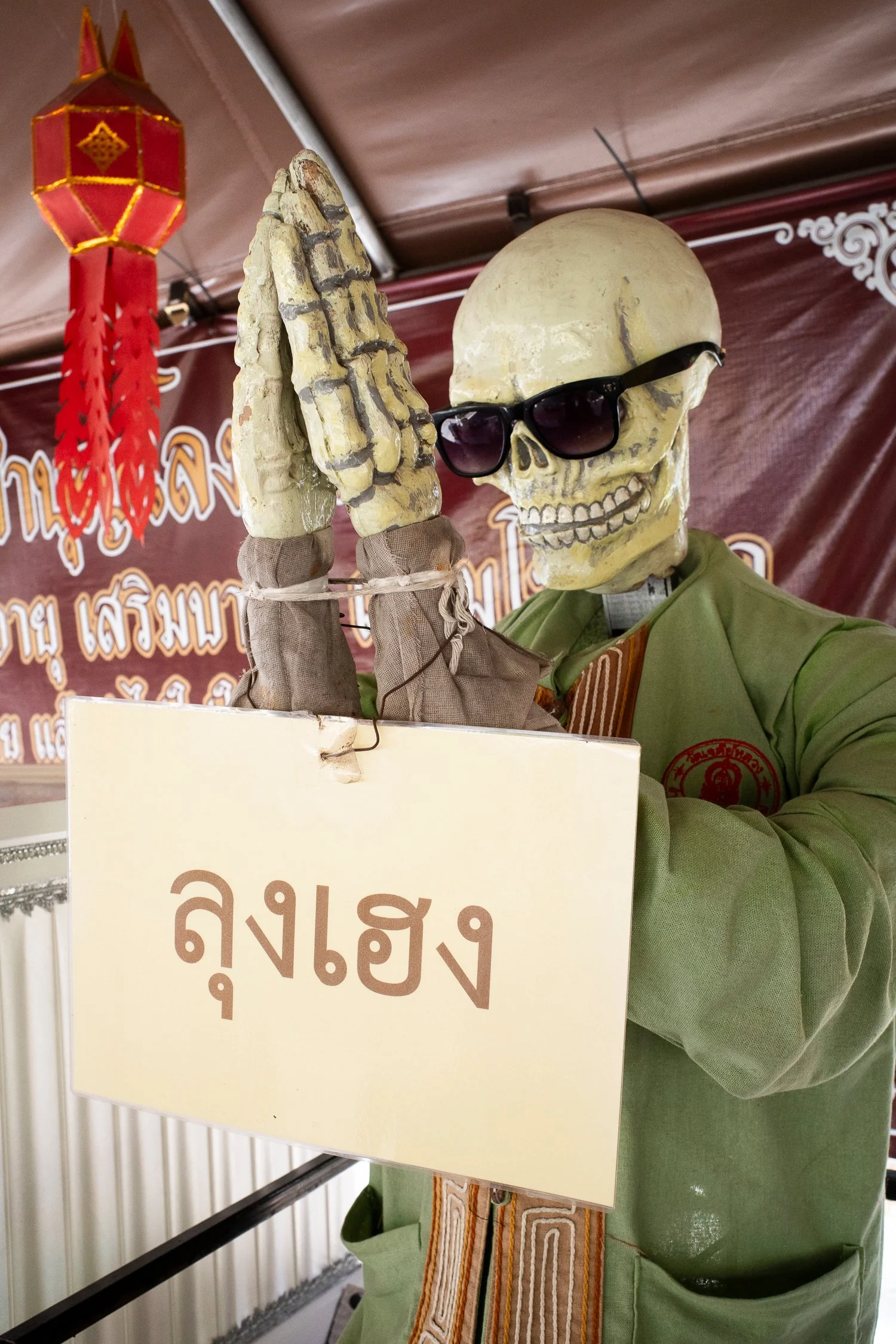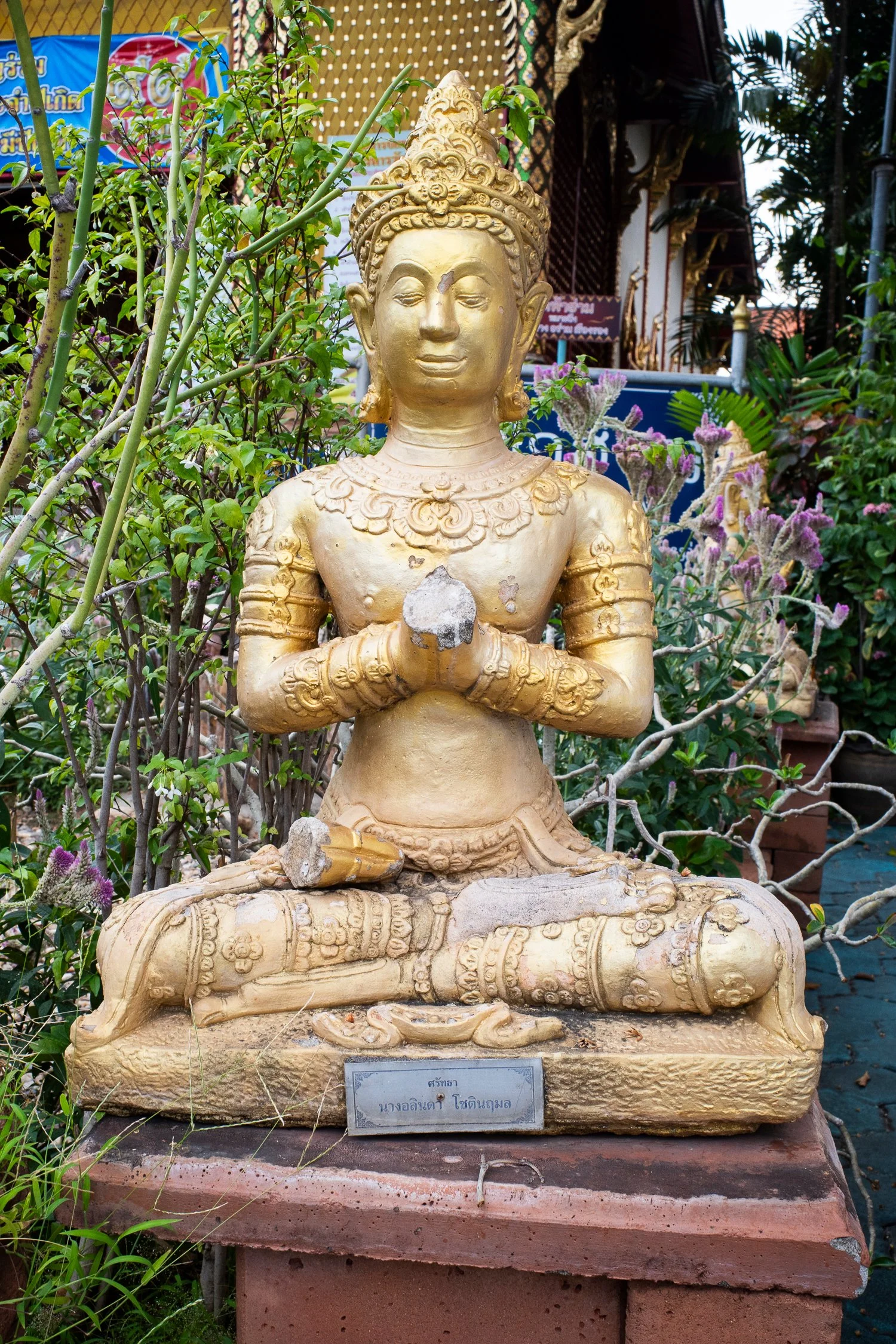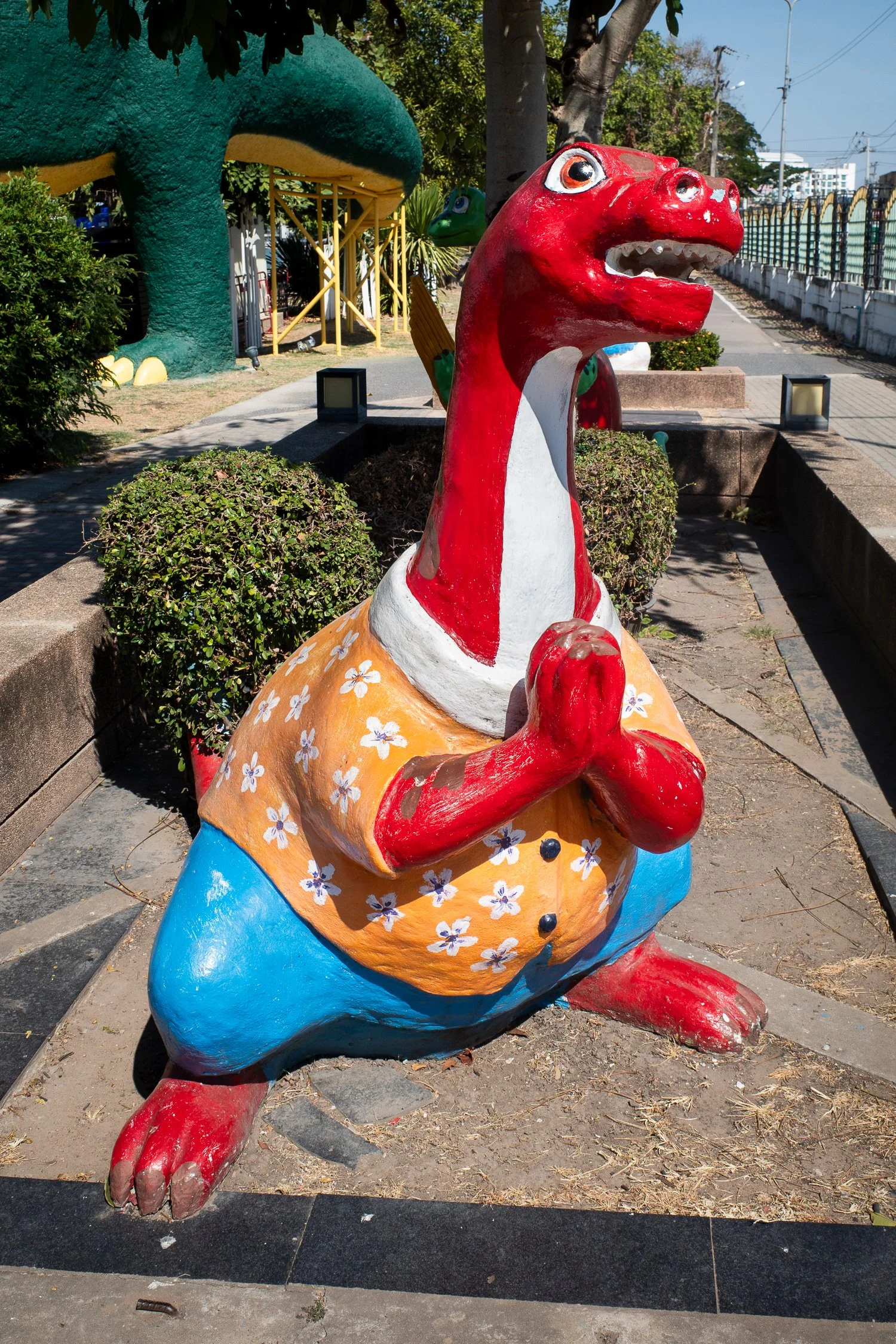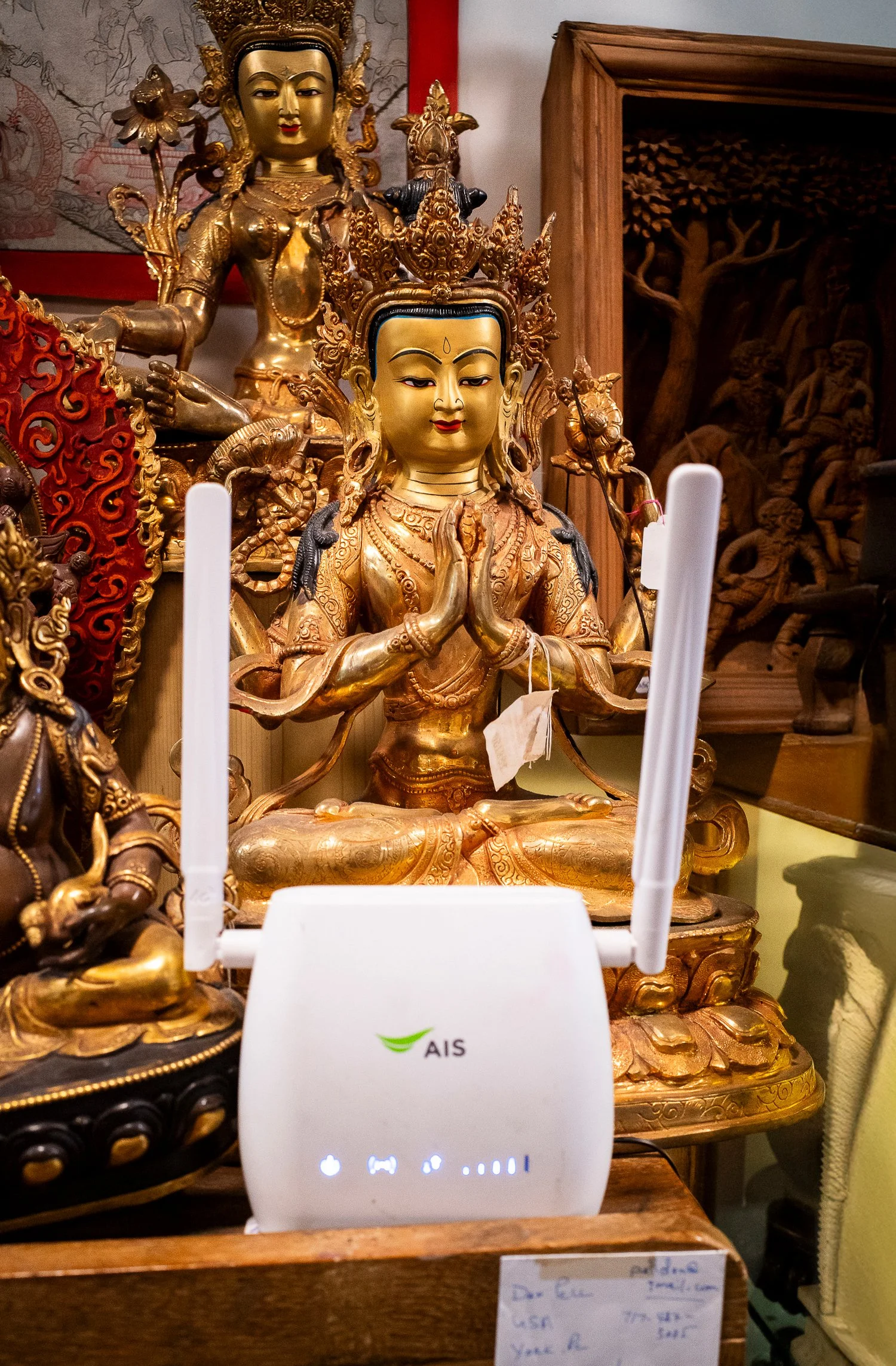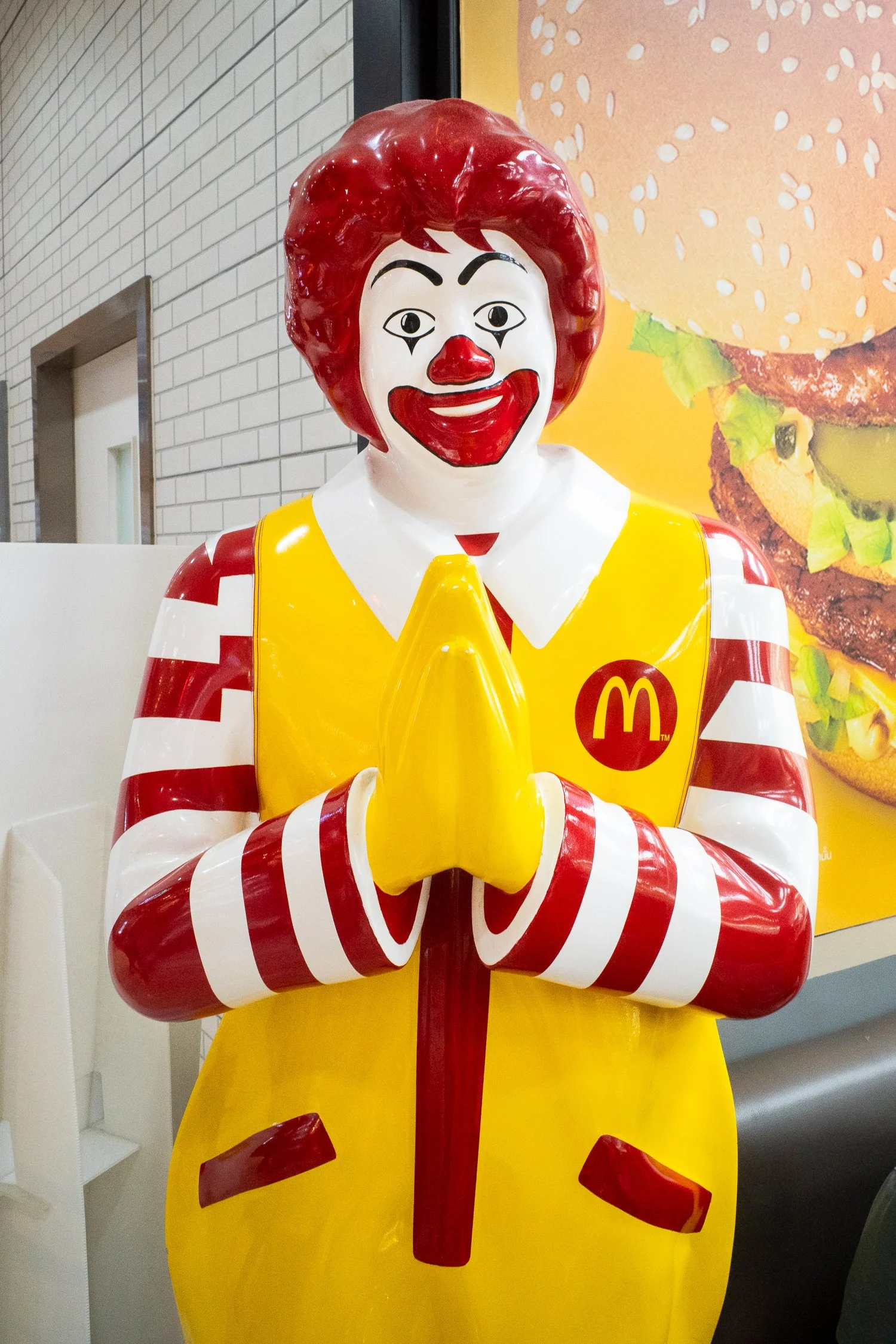
“Sawadee” is Barry Macdonald’s latest photographic exploration of Thai culture, centred around the iconic ‘wai’ gesture, not through people, but through the countless statues and mascots performing the gesture across Thailand. For readers who might not know, the ‘Wai’ is a traditional Thai gesture where you press your palms together and bow your head slightly.
To most Thais, the ‘wai’ is simply something that ‘is’, but for Barry it opens a new doorway into understanding this new place he now calls his second home. To him, it reflects how this culture communicates respect, hierarchy, belief, and emotion through a gesture rather than words.
Coming from the UK where greetings are handshakes and fist bumps, the ‘wai’ instantly felt unique to Barry. “I remember being in a meter taxi and as he drove past a temple he took both hands off the wheel so he could ‘wai’ and bow his head to the Buddha, giving me a momentary fright, ” he recalls. This devotion revealed to Barry early on how deeply rooted and instinctive the ‘wai’ is for Thais.
The project itself unfolded slowly over two years. Barry carried his camera everywhere and let the story “come to him,” discovering wai statues all around Thailand. Once he became familiar with the visual cue, he could spot them from far away using the same pattern recognition he developed in earlier projects like The Fabric of Society and DIY Thai Chairs.
Barry has always examined Thai culture through objects rather than people. Sawadee continues this archaeological way of seeing, studying society through its “artefacts.” Instead of photographing people performing the ‘wai’, he focuses on religious and commercial statues doing it, showing how the gesture carries cultural weight even when performed by inanimate objects.
The ‘wai’ might look simple from the outside, but after spending some time in Thailand Barry realised how many cultural layers sit inside this small gesture. There’s hierarchy, not just general respect but the very Thai way of recognising age, position and seniority. The height of your hands depends on who you’re paying respect to, when you should return a ‘wai’ and when you shouldn’t, and all the subtle social rules in between. It isn’t just a visible sign of politeness—it can mean hello, goodbye, thank you, sorry, asking for mercy, and so many other things depending on the moment.
When we live in a place long enough, the familiar begins to fade. The culture, the food and even the everyday gestures lose their spark and slip quietly into the background. Sometimes it takes an outside perspective to bring those details back into focus, as if borrowing their eyes lets us see all the magic once again.